

Creating a successful marketing agency website is about much more than having an attractive design. Your website is often the first place potential clients interact with your business, making it one of your most valuable marketing tools. A well-planned marketing agency website should clearly communicate your expertise, showcase your work, and guide visitors toward becoming customers.
Today’s businesses compare agencies online before making contact. If your marketing agency website looks outdated, loads slowly, or lacks useful information, visitors may leave and choose a competitor instead. On the other hand, a professional website builds trust, demonstrates authority, and helps generate consistent leads.
Whether you run a startup agency or an established digital marketing company, investing in a high-quality marketing agency website can significantly improve your online visibility and business growth.
In this guide, we’ll explore the essential features that every marketing agency website should include to attract more visitors, improve search engine rankings, and convert prospects into loyal clients.
Why Every Marketing Agency Needs a Strong Website
Your website is available 24 hours a day, seven days a week. While your team sleeps, your marketing agency website continues working by answering questions, showcasing your services, and collecting inquiries.
Unlike social media platforms, you fully control your website. This gives you complete freedom to present your brand exactly how you want while optimizing every page for search engines.
A successful marketing agency website helps you:
- Build credibility with new visitors
- Generate qualified leads
- Showcase your portfolio
- Explain your services clearly
- Improve Google rankings through SEO
- Create a memorable first impression
Think of your website as your agency’s digital office. Every visitor should quickly understand what you do, who you help, and why they should trust you.
1. A Clear Value Proposition
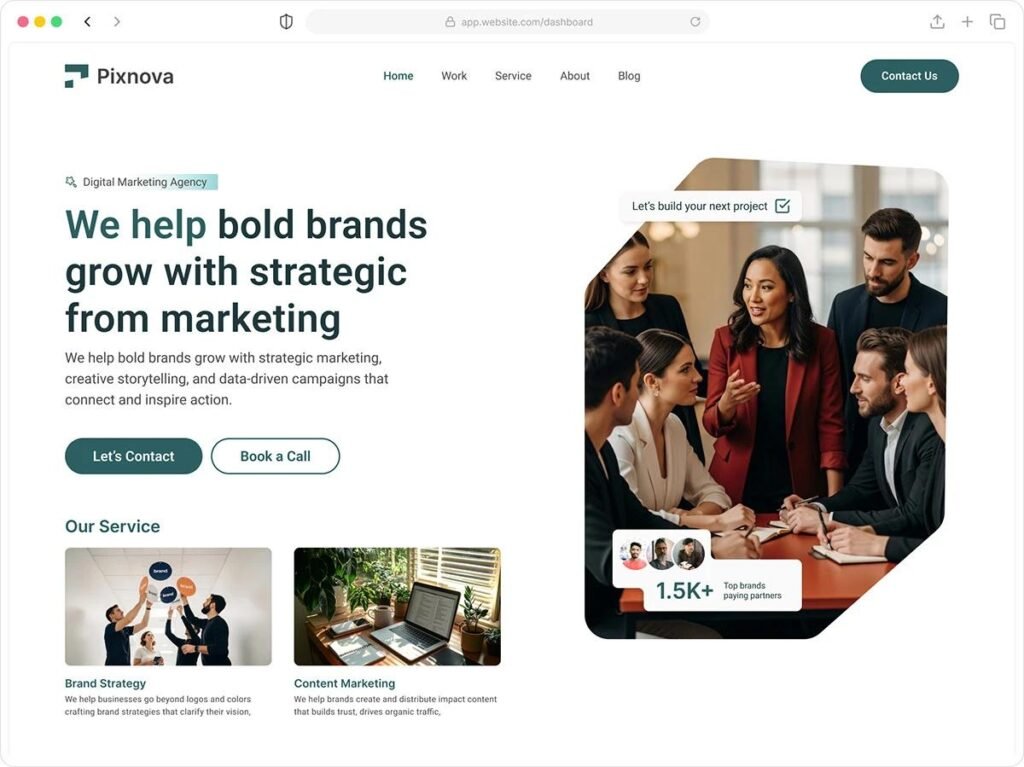
The first few seconds determine whether visitors stay on your website or leave.
Your homepage should immediately answer three questions:
- What does your agency do?
- Who do you help?
- Why should someone choose your agency?
Instead of vague headlines like “We Build Brands” or “Creative Digital Solutions,” use messaging that clearly communicates your value.
For example:
Helping Small Businesses Grow Through SEO, Website Design, and Digital Marketing.
A great marketing agency website focuses on the client’s needs rather than talking only about the agency. Visitors care about solving their problems, increasing revenue, and growing their business.
Supporting your headline with a brief description and a strong call-to-action encourages users to continue exploring your website.
2. Professional and Modern Website Design
Design creates the first impression of your agency.
If your marketing agency website appears outdated or cluttered, visitors may assume your services are equally outdated. Modern design builds confidence and reflects professionalism.
Some essential design principles include:
Keep the Layout Simple
Avoid overcrowding pages with too much text or unnecessary graphics. White space improves readability and helps users focus on important content.
Maintain Consistent Branding
Use the same fonts, colors, logo, and visual style throughout your website. Consistency strengthens brand recognition and creates a polished appearance.
Use High-Quality Images
Instead of generic stock photos, showcase your real team, office, completed projects, or client collaborations whenever possible. Authentic visuals make your marketing agency website feel more trustworthy.
Improve Readability
Choose clear fonts, appropriate spacing, and logical content sections. Visitors should be able to scan your pages quickly and find the information they need.
Professional design isn’t about adding flashy animations—it’s about creating a clean experience that helps users take action.
3. Mobile-Friendly User Experience
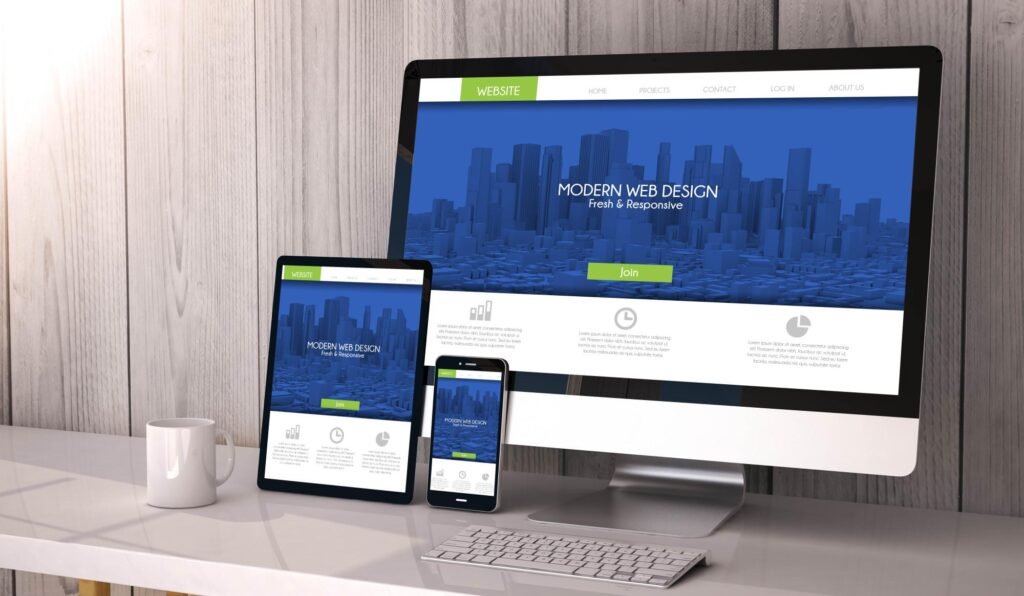
More people browse websites on smartphones than ever before. If your marketing agency website doesn’t work well on mobile devices, you’re likely losing valuable leads.
Responsive design automatically adjusts your layout for different screen sizes, ensuring visitors have a smooth experience whether they’re using a desktop, tablet, or phone.
A mobile-friendly website should include:
- Fast loading pages
- Easy-to-read text
- Large tap-friendly buttons
- Simple navigation
- Properly sized images
Google also prioritizes mobile-friendly websites in its search results. This means optimizing your marketing agency website for mobile users can improve both user experience and SEO performance.
Before publishing updates, test every page on multiple devices to ensure everything functions correctly.
4. Fast Website Speed
Website speed directly affects user satisfaction and search rankings.
Research consistently shows that visitors expect websites to load within just a few seconds. If your marketing agency website takes too long to appear, many users will leave before reading your content.
Several factors influence loading speed:
- Large image files
- Poor-quality hosting
- Unoptimized code
- Too many plugins
- Excessive animations
To improve performance:
- Compress images before uploading.
- Enable browser caching.
- Minify CSS and JavaScript files.
- Remove unnecessary plugins.
- Use a reliable hosting provider.
- Implement lazy loading for images.
Fast websites provide a better user experience and encourage visitors to stay longer, explore more pages, and contact your agency.
Additionally, Google considers page speed as part of its ranking signals, making optimization an important component of every successful marketing agency website.
5. Strong Calls-to-Action (CTAs) That Encourage Action
A beautiful marketing agency website is only effective if it encourages visitors to take the next step. This is where calls-to-action (CTAs) play a crucial role. Every page should guide users toward a specific action instead of leaving them wondering what to do next.
A CTA can invite visitors to:
- Book a free consultation
- Request a quote
- Schedule a discovery call
- View your portfolio
- Download a free guide
- Contact your team
The best CTAs are clear, action-oriented, and benefit-focused. Instead of using generic text like “Submit”, consider phrases such as:
- Get Your Free Website Audit
- Start Your Project Today
- Book a Free Strategy Call
- Let’s Grow Your Business
Your marketing agency website should include CTAs in multiple locations—not just on the Contact page. Place them on your homepage, service pages, blog posts, portfolio, and even within long-form content where readers are most engaged.
It’s also important to avoid overwhelming visitors with too many competing buttons. Keep your primary CTA consistent throughout the website so users always know the next logical step.
6. Dedicated Service Pages That Solve Client Problems
One of the biggest mistakes agencies make is listing all their services on a single page with only a few sentences about each one. A high-performing marketing agency website should have separate pages for every core service.
For example, you might create dedicated pages for:
- Search Engine Optimization (SEO)
- Website Design
- Website Development
- Branding & Graphic Design
- Social Media Management
- Google Ads
- Facebook Ads
- Content Marketing
- Video Editing
- Email Marketing
Each service page should explain:
The Client’s Problem
Start by identifying the challenges your audience faces. For example, businesses looking for SEO services may struggle with low search rankings, declining website traffic, or poor online visibility.
Showing that you understand their pain points builds trust immediately.
Your Solution
Clearly explain how your agency solves those challenges. Avoid technical jargon and focus on the business outcomes your clients can expect.
Instead of saying:
We optimize websites using advanced strategies.
Say:
We help businesses increase their Google rankings, attract qualified traffic, and generate more leads through proven SEO strategies.
Your Process
Many potential clients want to know what working with your agency will look like.
Outline a simple process such as:
- Discovery Call
- Strategy Development
- Project Execution
- Performance Monitoring
- Ongoing Optimization
A transparent process makes your marketing agency website feel more professional and approachable.
7. Showcase Your Portfolio and Real Results
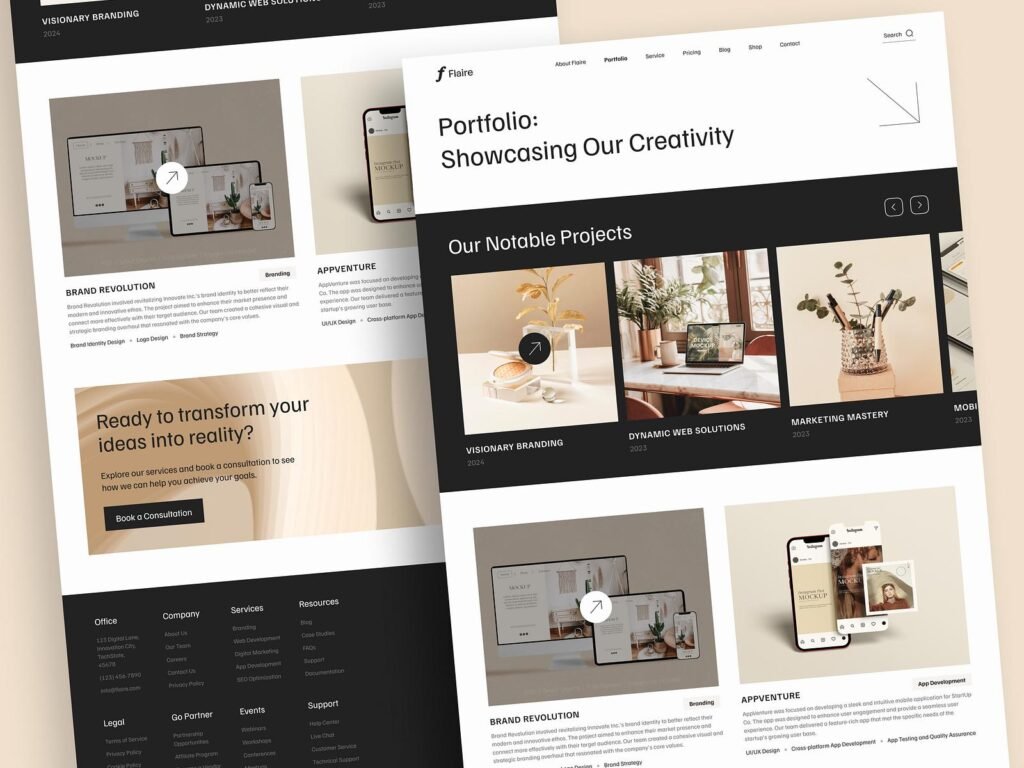
Visitors don’t just want promises—they want proof.
One of the strongest sections of any marketing agency website is the portfolio. This demonstrates your experience and gives potential clients confidence that you can deliver results.
Instead of simply displaying screenshots, explain the story behind each project.
A strong case study should include:
- Client name (if permitted)
- Industry
- Project goals
- Challenges
- Services provided
- Strategy used
- Results achieved
For example:
Client: Hotel Barmoi
Industry: Hospitality
Services Provided:
- Website Design
- SEO
- Brand Identity
- Social Media Support
Challenge:
The client had an outdated website with limited online visibility.
Solution:
We redesigned the website, optimized it for search engines, improved the user experience, and developed branded marketing materials.
Result:
The business achieved better search visibility, a stronger online presence, and improved customer engagement.
This type of content makes your marketing agency website far more persuasive than simply claiming you’re experienced.
If possible, include measurable results such as:
- Organic traffic growth
- Increased conversions
- Higher search rankings
- More inquiries
- Improved website speed
- Better engagement
Numbers build credibility.
8. Client Testimonials and Social Proof
People trust other people.
Before hiring an agency, most clients look for reviews, testimonials, or recommendations. That’s why every marketing agency website should prominently feature social proof.
You can include:
- Written testimonials
- Video testimonials
- Google Reviews
- Facebook Reviews
- Client logos
- Industry awards
- Partner certifications
Instead of displaying only a short quote like:
Great service!
Use testimonials that explain the client’s experience.
For example:
“Fans Connector completely redesigned our website and improved our Google rankings within a few months. Their communication was excellent, and the final result exceeded our expectations.”
Longer testimonials feel more authentic because they describe specific outcomes.
Adding the client’s name, company, and photo (with permission) further increases trust.
Your marketing agency website can also include statistics such as:
- 100+ Completed Projects
- 50+ Happy Clients
- 8+ Years of Experience
- 95% Client Satisfaction Rate
These numbers reinforce your credibility at a glance.
9. Search Engine Optimization (SEO)
Even the most beautiful marketing agency website won’t generate consistent leads if people can’t find it.
Search Engine Optimization (SEO) helps your website appear in Google when potential clients search for services like:
- Website Design Agency
- SEO Company
- Social Media Marketing Agency
- Digital Marketing Services
Every page should follow SEO best practices.
Keyword Optimization
Use relevant keywords naturally throughout your content.
For example, if your focus keyword is marketing agency website, include it in:
- SEO title
- URL
- Meta description
- Introduction
- Headings
- Image alt text
- Conclusion
Avoid keyword stuffing. Instead, write naturally while ensuring the keyword appears where it makes sense.
Internal Linking
Connect related pages throughout your website.
For example:
- Homepage → Website Design
- Website Design → Portfolio
- Portfolio → Contact Page
- Blog → SEO Services
Internal links help visitors navigate your website while also improving SEO.
Optimized Images
Large images slow down websites.
Compress every image before uploading and use descriptive file names like:
- marketing-agency-website-homepage.webp
- seo-dashboard-analysis.webp
- responsive-web-design.webp
Don’t forget to add descriptive alt text for accessibility and search engines.
Helpful Blog Content
Publishing educational articles consistently is one of the best ways to improve your website’s authority.
Topics might include:
- Website Design Tips
- Local SEO Guides
- Google Ads Strategies
- Branding Advice
- Social Media Best Practices
- Content Marketing Ideas
High-quality blogs attract organic traffic and demonstrate your expertise.
A successful marketing agency website isn’t built once and forgotten. It should continue growing through fresh content, regular optimization, and ongoing improvements based on user behavior and search trends.
10. Publish Helpful Blog Content Consistently
A successful marketing agency website isn’t just a digital brochure—it’s a valuable resource that educates potential clients. One of the best ways to achieve this is by maintaining an active blog.
Every blog post gives your website another opportunity to rank in search engines and attract visitors who are looking for solutions to their marketing challenges.
Consider writing about topics like:
- How to improve website SEO
- Social media marketing strategies
- Website design trends
- Google Ads best practices
- Branding tips for small businesses
- Email marketing guides
- Local SEO strategies
- Content marketing ideas
Each article should solve a real problem rather than simply promote your services. When readers consistently find useful information on your marketing agency website, they begin to see your agency as a trusted expert.
Blogs also create opportunities for internal linking. For example, if you’re writing about SEO, you can naturally link to your SEO Services page. This improves user experience while helping search engines understand your website’s structure.
To keep your content relevant, create a publishing schedule. Even posting two or three high-quality articles each month can steadily increase your website’s authority and organic traffic over time.
11. Make It Easy for Visitors to Contact You
Many agencies lose potential clients because their contact information is difficult to find. A high-converting marketing agency website makes it simple for visitors to reach out at any stage of their journey.
Your Contact page should include:
- Contact form
- Business email address
- Phone number
- Office location (if applicable)
- Business hours
- Google Maps (if you serve local clients)
- Social media links
Keep your contact form short and straightforward. Asking for too much information can discourage users from completing it.
A simple form might include:
- Name
- Email Address
- Company Name
- Website (Optional)
- Project Details
You can also add a friendly message explaining what happens after someone submits the form, such as:
“We’ll review your inquiry and get back to you within one business day.”
This small detail sets expectations and reassures potential clients that they will receive a prompt response.
Another effective strategy is placing contact buttons throughout your marketing agency website instead of limiting them to the Contact page. Visitors who decide to reach out shouldn’t have to search for a way to contact you.
12. Build Trust with Credibility Signals
Trust is one of the biggest factors influencing whether someone chooses your agency over a competitor. A professional marketing agency website should include credibility signals that reassure visitors they are making the right choice.
Examples include:
- SSL Certificate (HTTPS)
- Google Partner Badge
- Meta Business Partner Badge
- Industry Certifications
- Awards and Recognition
- Client Logos
- Verified Testimonials
- Years of Experience
- Number of Completed Projects
Introducing your team is another excellent way to build trust. Include professional photos and short biographies that highlight each team member’s expertise.
Visitors are more likely to work with people they can see and learn about.
If your agency has been featured in publications or has earned certifications, display those achievements proudly. These elements strengthen the credibility of your marketing agency website and help reduce hesitation among potential clients.
To learn more about Google’s recommended SEO practices, you can explore the Google Search Central SEO Starter Guide
Common Mistakes to Avoid
Even experienced agencies can make mistakes that reduce their website’s effectiveness. Avoiding these common issues can significantly improve the performance of your marketing agency website.
1. Slow Loading Pages
Visitors expect fast websites. Large images, poor hosting, and unnecessary plugins can increase loading times and drive users away.
2. Confusing Navigation
Your menu should be simple and organized. Visitors should be able to find important pages such as Services, Portfolio, About, Blog, and Contact without confusion.
3. Weak Calls-to-Action
If visitors don’t know what to do next, many will leave without contacting you. Every important page should include a clear CTA.
4. No Portfolio or Case Studies
Claims alone aren’t enough. Real examples of your work help demonstrate your expertise and build confidence.
5. Ignoring SEO
Without proper optimization, even the best marketing agency website may struggle to appear in search results.
6. Outdated Content
Review your website regularly to ensure service descriptions, pricing, testimonials, and portfolio projects remain current.
7. Using Generic Stock Photos
Whenever possible, use authentic photos of your team, office, or completed projects. Real images create stronger connections with visitors.
A Simple Checklist for Your Marketing Agency Website
Before launching or updating your website, make sure you can answer “Yes” to these questions:
- Is your value proposition clear?
- Is the design modern and professional?
- Does the website work well on mobile devices?
- Does every page load quickly?
- Are your services explained clearly?
- Do you showcase real portfolio projects?
- Have you included client testimonials?
- Is your website optimized for SEO?
- Do you publish helpful blog content regularly?
- Are contact details easy to find?
- Are there clear calls-to-action on every important page?
- Does your website include trust-building elements?
If you answered “No” to any of these, that area should become your next priority.
How Fans Connector Can Help
Building a successful marketing agency website requires more than an attractive design. It takes the right combination of strategy, SEO, user experience, and conversion-focused content to turn visitors into customers.
At Fans Connector, we help businesses create websites that are designed to support long-term growth. From professional website design and search engine optimization to branding and digital marketing, our team focuses on building websites that are fast, mobile-friendly, and optimized for both users and search engines.
Whether you’re launching a new website or improving an existing one, small changes can make a big difference in your online performance. By following proven best practices and continuously optimizing your website, you can create a stronger online presence and generate more qualified leads over time.
If you’re planning to improve your marketing agency website, the team at Fans Connector is always happy to discuss your goals and explore solutions that fit your business needs.
Looking for a high-performing agency website? Learn more about our Website Design services.
Final Thoughts
Creating an outstanding marketing agency website takes careful planning, but the investment is worth it. Your website should do more than simply describe your services—it should attract qualified visitors, build trust, demonstrate expertise, and convert prospects into loyal clients.
By focusing on clear messaging, professional design, responsive performance, SEO, valuable content, strong calls-to-action, and real proof of results, your marketing agency website can become one of your agency’s most effective marketing assets.
Remember that your website is never truly finished. Regularly update your portfolio, publish new blog posts, improve page speed, monitor analytics, and refine your content based on user behavior. Continuous improvement will help your agency stay competitive and deliver a better experience for every visitor.
Whether you’re launching a new agency or refreshing an existing site, these essential features will help you build a marketing agency website that attracts more traffic, generates more leads, and supports long-term business growth.
Ready to Build a Website That Represents Your Agency?
If you’re looking to create a modern, professional, and SEO-friendly marketing agency website, Fans Connector is ready to help. Our team focuses on creating websites that reflect your brand, highlight your expertise, and support your long-term business goals.
Frequently Asked Questions
1. What is a marketing agency website?
A marketing agency website showcases an agency’s services, portfolio, and expertise to attract and convert potential clients.
2. Why is SEO important for a marketing agency website?
SEO helps a marketing agency website rank higher in search results, bringing more organic traffic and leads.
3. What pages should a marketing agency website have?
Essential pages include Home, About, Services, Portfolio, Blog, FAQs, and Contact.
4. How often should I update my marketing agency website?
Update your marketing agency website regularly with new content, portfolio projects, and SEO improvements.
5. What makes a marketing agency website successful?
A successful marketing agency website combines clear messaging, modern design, fast performance, SEO, and strong calls-to-action.